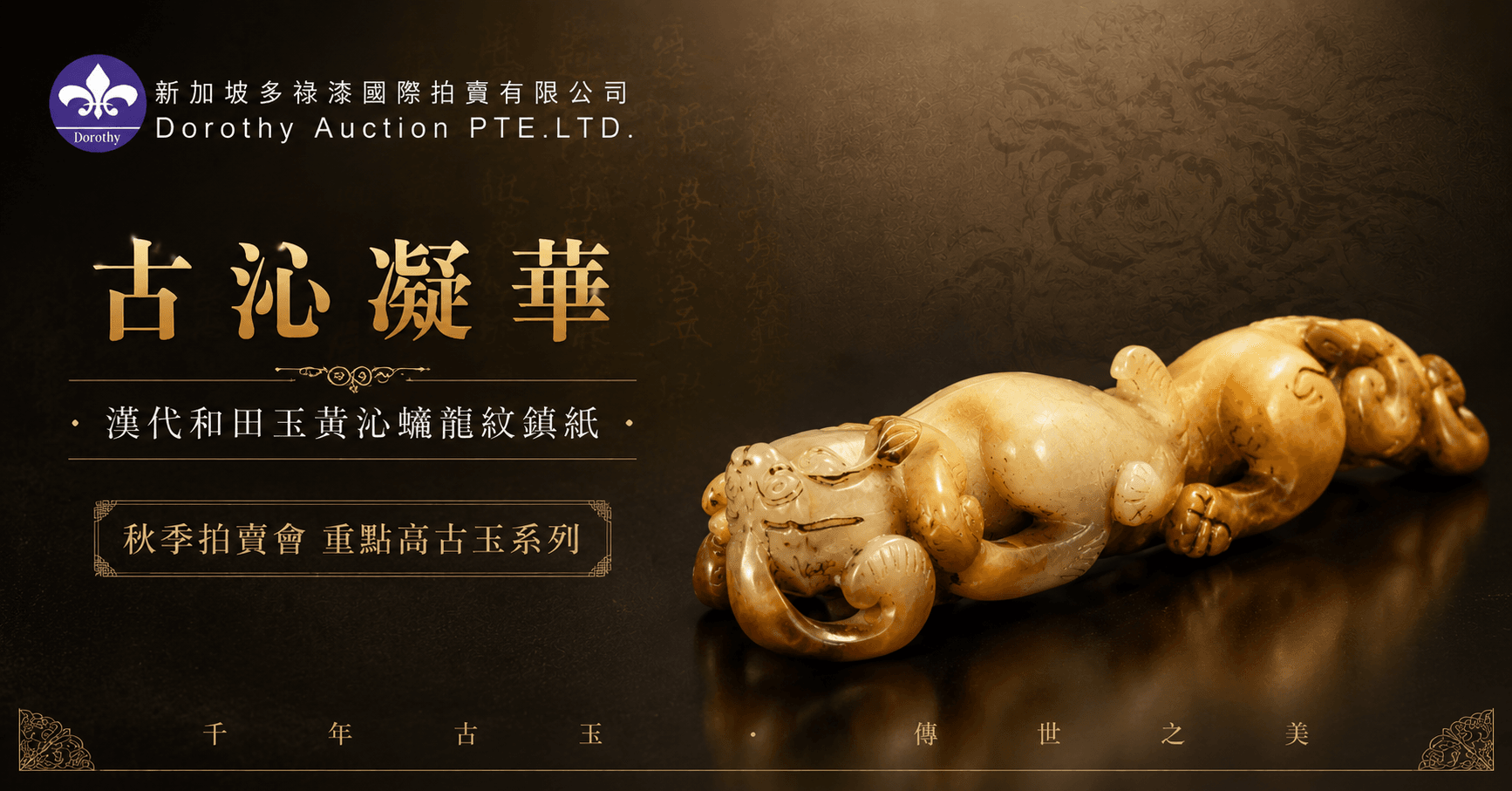
Ancient Patina, Timeless Elegance | Han Dynasty Hetian Yellow Jade Chilong Paperweight
一、千年黃沁,歲月凝光——古玉文化的時間印記
I. Millennia of Patina: The Mark of Time in Ancient Jade
黃沁古玉自古便為高端收藏領域極受重視的品類之一。沁色並非人工施作,而是在漫長埋藏環境中,經礦物質滲透、氧化與地質作用逐步形成。其生成往往需歷經數百年至千年以上的歲月沉澱,因此每一件黃沁古玉皆具有不可複製的自然特徵與獨特性。
Yellow-patinated ancient jade has long been regarded as one of the most desirable categories among serious collectors. Unlike surface coloration applied by human intervention, the patina develops naturally through centuries of mineral infiltration, oxidation, and geological transformation. The formation of such coloration often requires hundreds or even thousands of years, making every piece uniquely irreplaceable.
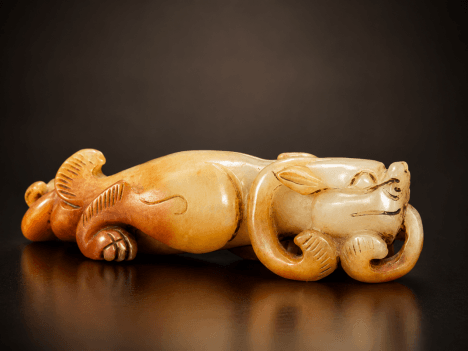
此件《漢代和田玉黃沁螭龍紋鎮紙》以整塊和田玉雕琢而成,通體沁色自然,黃褐色澤層層過渡,由淺至深漸次變化,色調沉穩內斂而富有歷史厚度。
Carved from a single piece of Hetian jade, this Han-style Yellow Jade Chilong Paperweight displays naturally developed yellow-brown patination with subtle tonal gradations. The rich coloration conveys both elegance and the profound passage of time.
二、螭龍瑞獸——漢代玉雕藝術的重要象徵
II. The Auspicious Chilong: A Defining Symbol of Han Dynasty Jade Art
螭龍題材是漢代玉器最具代表性的紋飾之一。
The chilong, or hornless dragon, is among the most iconic decorative motifs found in Han Dynasty jade carvings.
漢代崇尚祥瑞文化,龍被視為天地之間的重要神獸,而螭龍則象徵守護、權威與吉祥,因此廣泛見於王侯貴族及高等級禮器之上。
During the Han Dynasty, dragon imagery was deeply connected with imperial authority, cosmic order, and auspicious symbolism. The chilong, in particular, represented protection, nobility, and prosperity, frequently appearing on ceremonial and aristocratic objects.
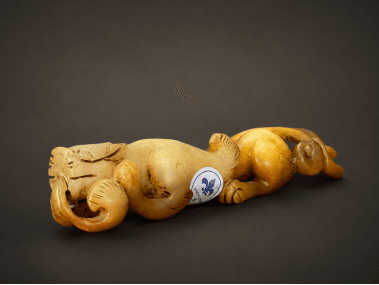
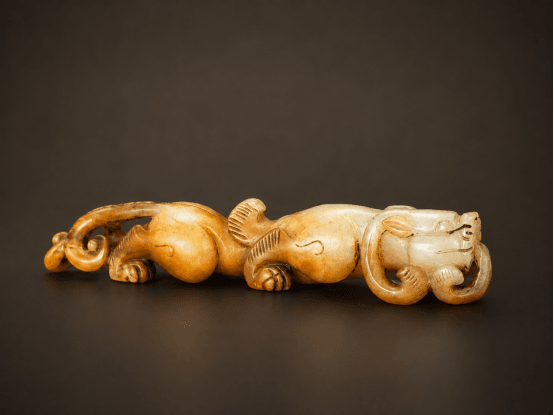
本件作品以高浮雕手法雕琢螭龍形象,龍首微昂,身軀蜿蜒舒展,尾部自然卷曲,線條古拙有力,展現漢代玉雕特有的雄渾氣韻。This piece is carved in high relief, depicting a chilong with raised head, elongated body, and elegantly curled tail. The powerful yet restrained carving style reflects the distinctive aesthetic spirit of Han Dynasty jade craftsmanship.
三、文房雅器與高古玉的融合
III. The Convergence of Scholar’s Taste and Ancient Jade Culture
鎮紙作為中國傳統文房器的重要組成部分,自古便承載著文人審美與書齋文化。
As an essential element of the traditional Chinese scholar’s studio, the paperweight embodies the refined aesthetic ideals of literati culture.
此件作品巧妙結合螭龍瑞獸與文房鎮紙功能,使其不僅是一件玉雕藝術品,更兼具文房陳設與文化象徵價值。
This work seamlessly combines the auspicious chilong motif with the practical function of a scholar’s paperweight, serving both as an artistic sculpture and as a meaningful cultural object.
器形修長流暢,兼具觀賞性與實用性,展現中國古代文人文化所追求的雅致精神。
Its elongated form and elegant proportions offer both visual appeal and functionality, reflecting the refined taste traditionally associated with Chinese literati culture.
四、歲月痕跡——歷史真實性的見證
IV. Traces of Time: Witnesses to Historical Authenticity
器表可見自然磨蝕、風化與歲月流傳所留下的痕跡。
The surface displays natural wear, weathering, and age-related characteristics accumulated over centuries.
對於歷經千年以上保存至今的高古玉而言,這些歷史痕跡並非缺陷,而是其流傳歷程的重要見證。
For ancient jades that have survived for over a millennium, such traces are not flaws but rather invaluable evidence of authenticity and historical continuity.
長期氧化與沁色交融形成的溫潤包漿,使整體散發出古玉特有的沉靜氣息與收藏魅力。
The interaction of oxidation and patination has produced a soft, lustrous surface that enhances the object’s scholarly elegance and collectible appeal.
五、漢玉巔峰——中國古代玉文化的重要縮影
V. The Pinnacle of Han Jade: A Reflection of China’s Golden Age of Jade Culture
漢代被公認為中國古代玉文化的重要高峰。
The Han Dynasty is widely regarded as one of the most significant periods in the development of Chinese jade culture.
漢玉承襲先秦禮玉傳統,並融合大一統帝國的恢宏氣象,形成雄渾、古雅而富有精神力量的藝術風格。
Building upon earlier ritual jade traditions, Han artisans developed a style characterized by grandeur, simplicity, and spiritual depth, reflecting the confidence of a unified empire.
此件《漢代和田玉黃沁螭龍紋鎮紙》集黃沁古玉、螭龍瑞獸、文房文化與漢代美學精神於一身。
This Han Dynasty Hetian Yellow Jade Chilong Paperweight embodies the essence of yellow-patinated ancient jade, auspicious dragon symbolism, scholar’s culture, and Han aesthetic ideals.
歷經千年歲月洗禮,其神韻依然鮮活,不僅展現中國古代玉文化的深厚底蘊,更彰顯東方藝術歷久彌新的永恆魅力。Having endured the passage of centuries, it continues to radiate vitality and elegance, standing as a timeless testament to the enduring beauty of Chinese jade culture and Eastern artistic tradition.